Showing posts with label Napoleon. Show all posts

Sunday, July 07, 2013

A Tale of Two Châteaux


It was such a beautiful day yesterday, but very hot. I decided I needed a walk in the forest and found an itinerary that started an ended at a château. Perfect!

But first I had to walk to the château in Eybens, about four kilometres away. Napoleon stopped here in 1815, on his way from Laffrey where he had confronted the King’s army and come out of it rather well. It is said that on arriving in Eybens, he was offered a footbath by an old woman, la mère Simiand, before continuing his route to Grenoble. Lucky man...

I, meanwhile, set off beneath the blazing sun in my khaki shorts, acutely conscious of my pasty, muscular Welsh calves - inherited from my hill-farmer ancestors – as I trudged beside the busy main road and over the motorway bridge. It was a relief to finally reach the shady lanes around the château gardens.
Of the château itself, I barely caught a glimpse. It perches high on a hill overlooking the village, the rooftops peeking above the trees.
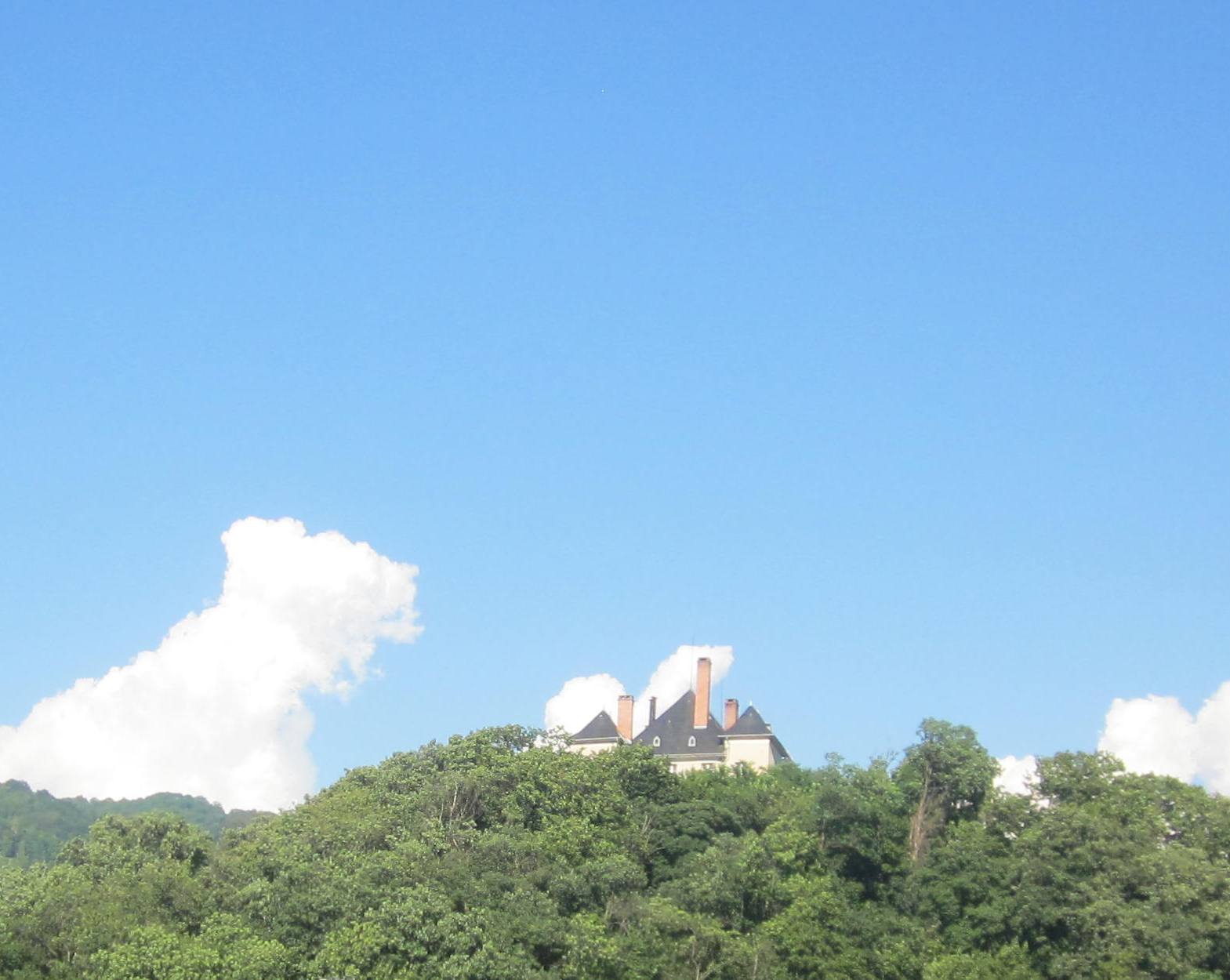


There is some mystery concerning its origins. Documents suggest the existence of a château before 1120 but it was rebuilt in the mid 17th century by, claims a rather salacious legend, Christine de Savoie, the daughter of Henri IV. Apparently, she built it as her personal royal Den of Iniquity, to entertain her numerous lovers and host all sorts of wickedness such as black masses and necromancy. As there is no hard evidence for this story, it was probably made up by someone who didn’t like her very much.


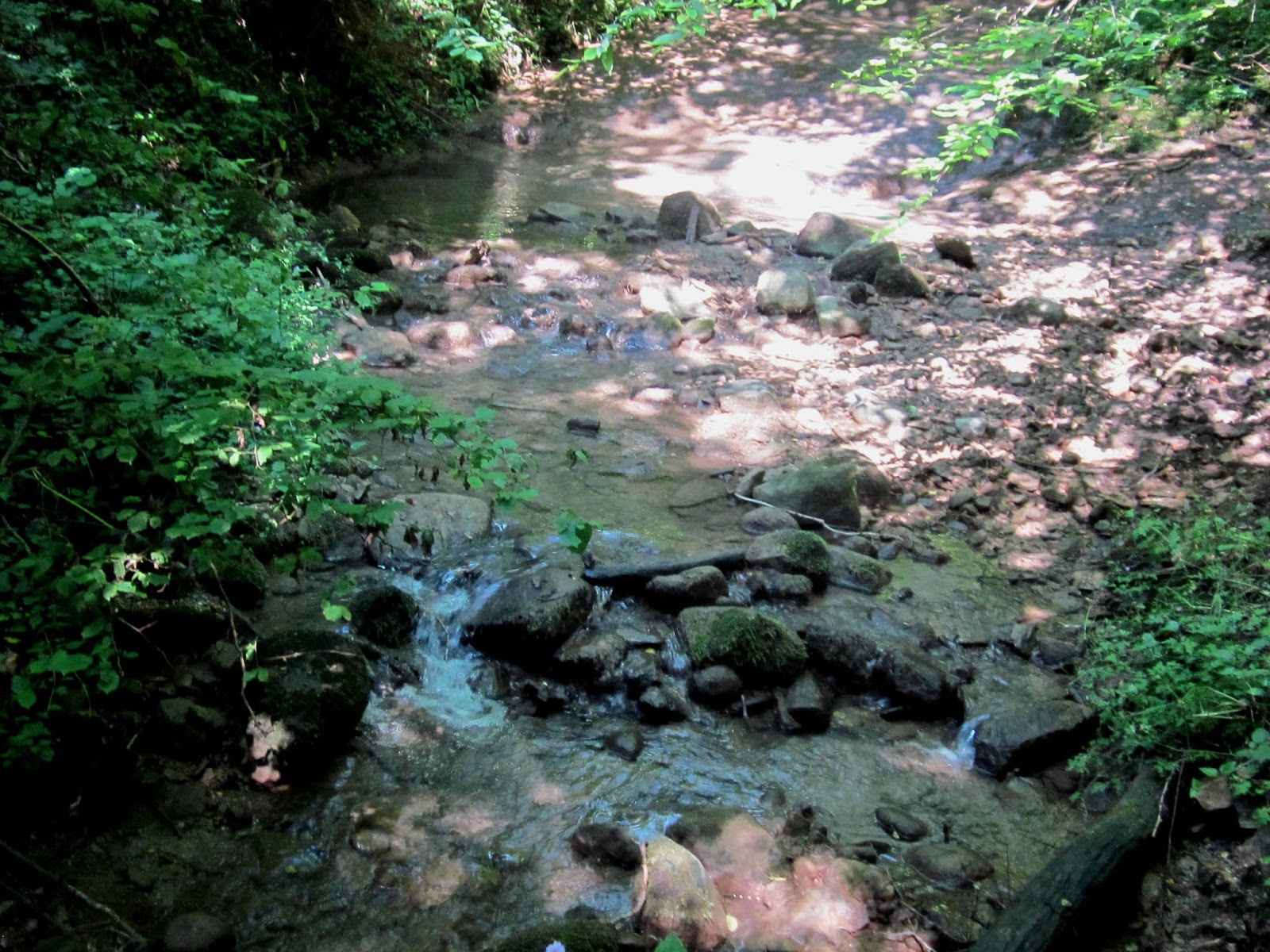
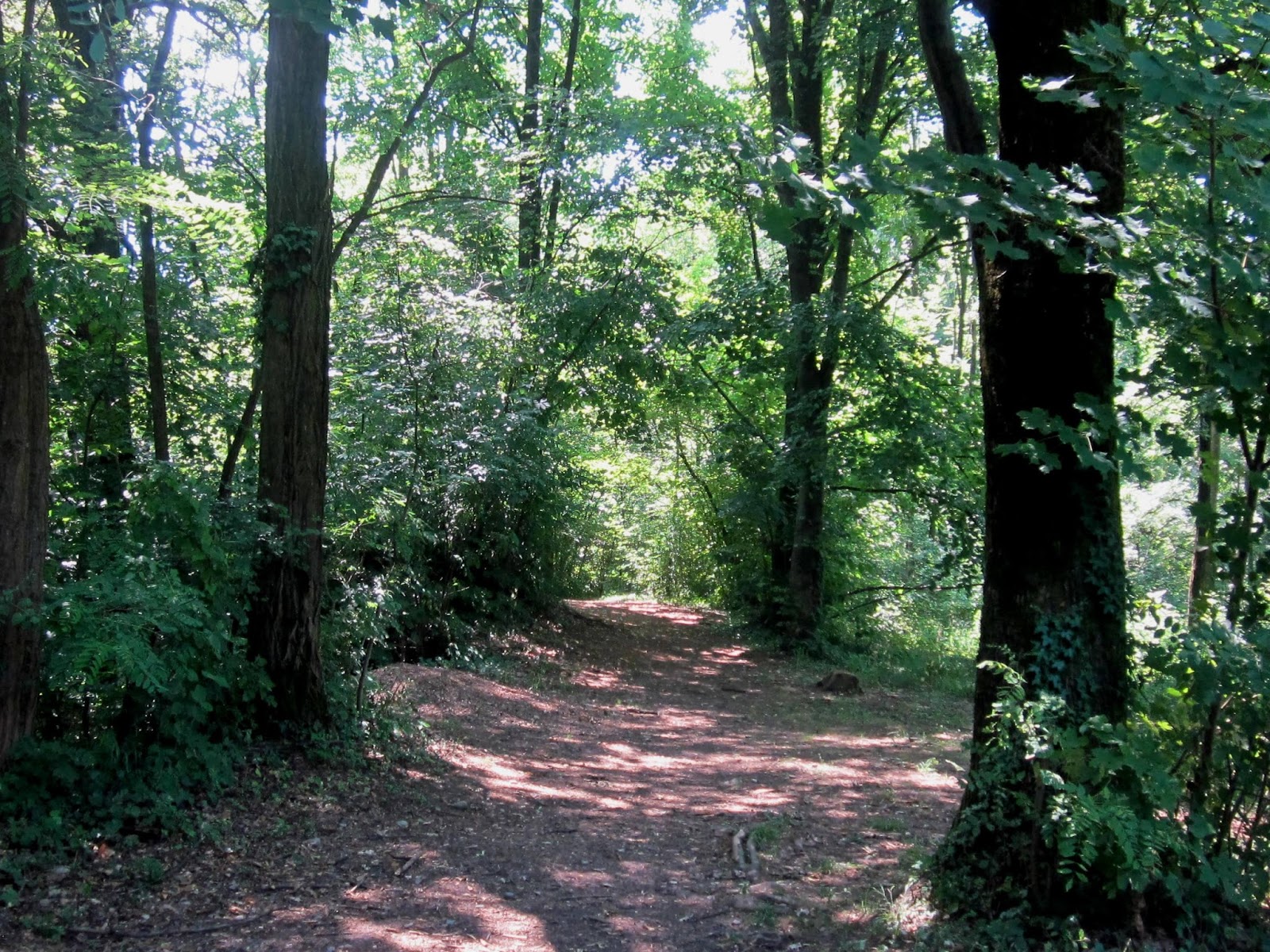
I had no feelings about Christine one way or another, I was just intent on getting started. The track ran alongside the walled gardens for a while, winding gently upwards until it reached a crossroads where I took the track to Herbeys. This track sloped down into a deliciously-cool, dark forest where birds sang, streams gurgled and a nasty horsefly stung me on the arm.


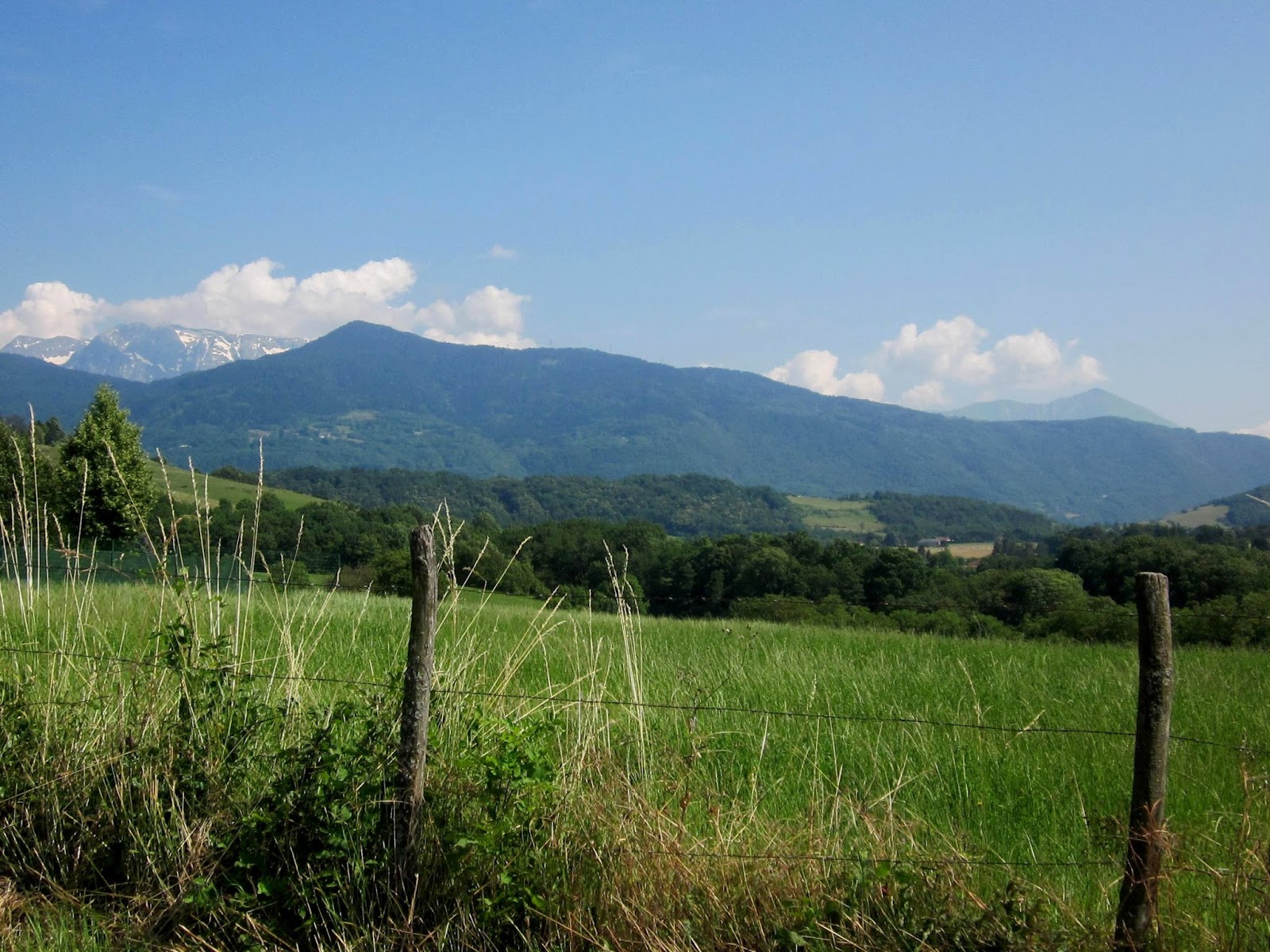
Then it was upwards again into the sunlight and a view across the meadows to the glorious mountains beyond.


I finally reached Herbeys. I had been here before, to climb the colline des Quatre Seigneurs and I knew I would be able to see the château from up there. But I was too tired and too hot and too thirsty to do that. So I wandered around the village looking for it ("easily visible from the road" they said) and…I couldn’t find it.

I do know that the château was once the Bishop’s Palace, that it dates from the year 1310 and that it is now privately owned. I also remember it being quite large so I had no idea why I couldn’t see it.

I splashed my face and arms in the icy water of the village fountain and headed back to Eybens, my sturdy calves now glowing pink in the late afternoon sun.

I may not have seen my beloved châteaux but at least I hadn’t got lost - just slightly confused. Most important of all, I felt - if such a thing is possible - both happily exhausted and completely revigorated.

And that, after all, is what it's all about...


Friday, March 02, 2007

Pots and pots


The Ancient Gauls were reputed for their charcuterie but the finer points of dining were unknown to them and they ate off animal skins while sitting on the floor. During mediaeval times, they progressed to wooden tables hollowed out at intervals while the richer members of society ate from earthenware dishes and later, glass.


Glazed pottery only made its appearance in France when the Crusaders, not content with massacring the Arabs, ran off with their crockery as well. The technique of glazing was perfected between the fourteenth and the sixteenth centuries and the most important figure at this time was a certain Bernard Palissy. He was, amongst other things, a self-taught potter, ceramicist, glassmaker, painter, writer, scientist, surveyor… and enameller. He had an extraordinary life and became something of a hero to the philosophers of the Enlightenment and the Revolutionaries who considered him to be the embodiment of persecuted genius. He devoted twenty years to discovering the secret of enamelling (probably after seeing an example of Chinese porcelain) and he was so obsessed by his work that even when he was too poor to provide for his wife and children, he burned his furniture and the floorboards of his home just to keep his kiln alight. His was – literally – potty. In 1563 he was appointed “inventor of rustic pottery to the king and the queen-mother" – and thus escaped the persecution of the protestants, of which he was one. He was also a naturalist and his most characteristic enamelled works include large plates, oval dishes and vases to which he applied realistic figures of reptiles, fish, shells and plants. The poor soul died in the Bastille prison - where he was sent as a Huguenot - of cold, starvation and ill treatment. He was eighty.


It was in the seventeenth century that faïence – fine tin-glazed earthenware originally from Faenza in Italy - got its big break, so to speak. Louis XIV was running out of money so he decided to have his tableware – made from silver and gold – melted down to supply his dwindling coffers. He decreed that the nobility do the same with their dinner services. Faïence from Moustiers in the south of France was deemed a suitably sophisticated and luxurious substitute and by 1750, there were over a hundred faïence factories in France. Even the army had its own specially commissioned faïence dinner services for officers.

In 1670, Louis XIV had a pavilion built in which to take tea (and crumpet no doubt) with his mistress, Madame de Montespan. The walls were covered in blue and white glazed ceramic tiles and the house was known as the Porcelain Trianon. A few years later, Madame fell out of favour and Louis had it demolished to make way for the Grand Trianon which still stands today.


In the eighteenth century, faïence manufacturers began to make other objects besides tableware: fountains, flower pots, chandeliers, chamber pots and bidets are some examples. Yet despite its popularity, the alchemists and potters of the period were still desperately searching for the secret of Chinese porcelain and they finally managed to create a tender or soft-paste porcelain. This looked like Chinese porcelain but it was softer and could be scratched with a knife. The essential ingredient was missing- that of kaolin (wasn’t that something you took to cure diarrhoea once upon a time?). In 1765, a surgeon observed his wife washing her clothes with a smooth, creamy clay that she had discovered and he thought he might be able to make some money from the idea. He took it to an apothecary in Bordeaux who identified it as kaolin and then he sold it to the porcelain factory in Sèvres. At last, after four hundred years of searching, the mystery of porcelain was solved. In 1771, the first manufactory was established in the Limousin region, producing the first Limoges hard-paste porcelain.


The French Revolution spelled ruined for many porcelain and faïence manufacturers. These were luxury commodities and there was no longer any demand for them. However, a few ingenious manufacturers produced faïence patriotique, decorated with revolutionary motifs and carrying the initials ‘RF’ (Révolution Française) and they managed to survive.


In the nineteenth century, faïence and porcelain was in favour again and Napoleon had several dinner services made depicting his victories in various campaigns. Painting portraits on porcelain became fashionable although these luxury ‘souvenir’ plates were available only for the very rich.


Today, Limoges porcelain is known all over the world and faïence is still made at Moustiers but there are many well-known porcelain and faïence manufacturers in France. Ceramics made by local craftsmen can be seen at any of the numerous craft fairs throughout the country. In fact, I’ve even been known to throw a few pots myself…